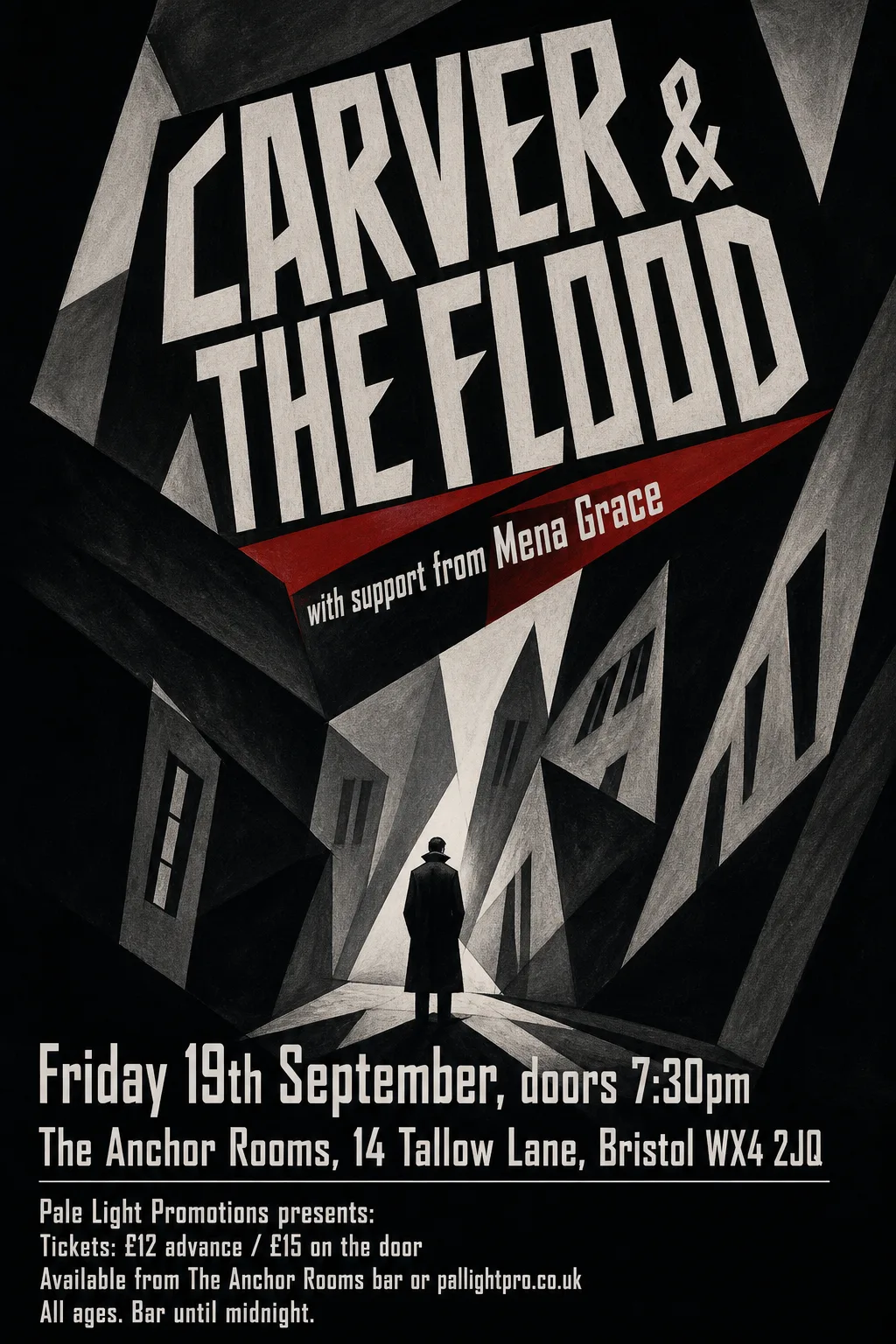
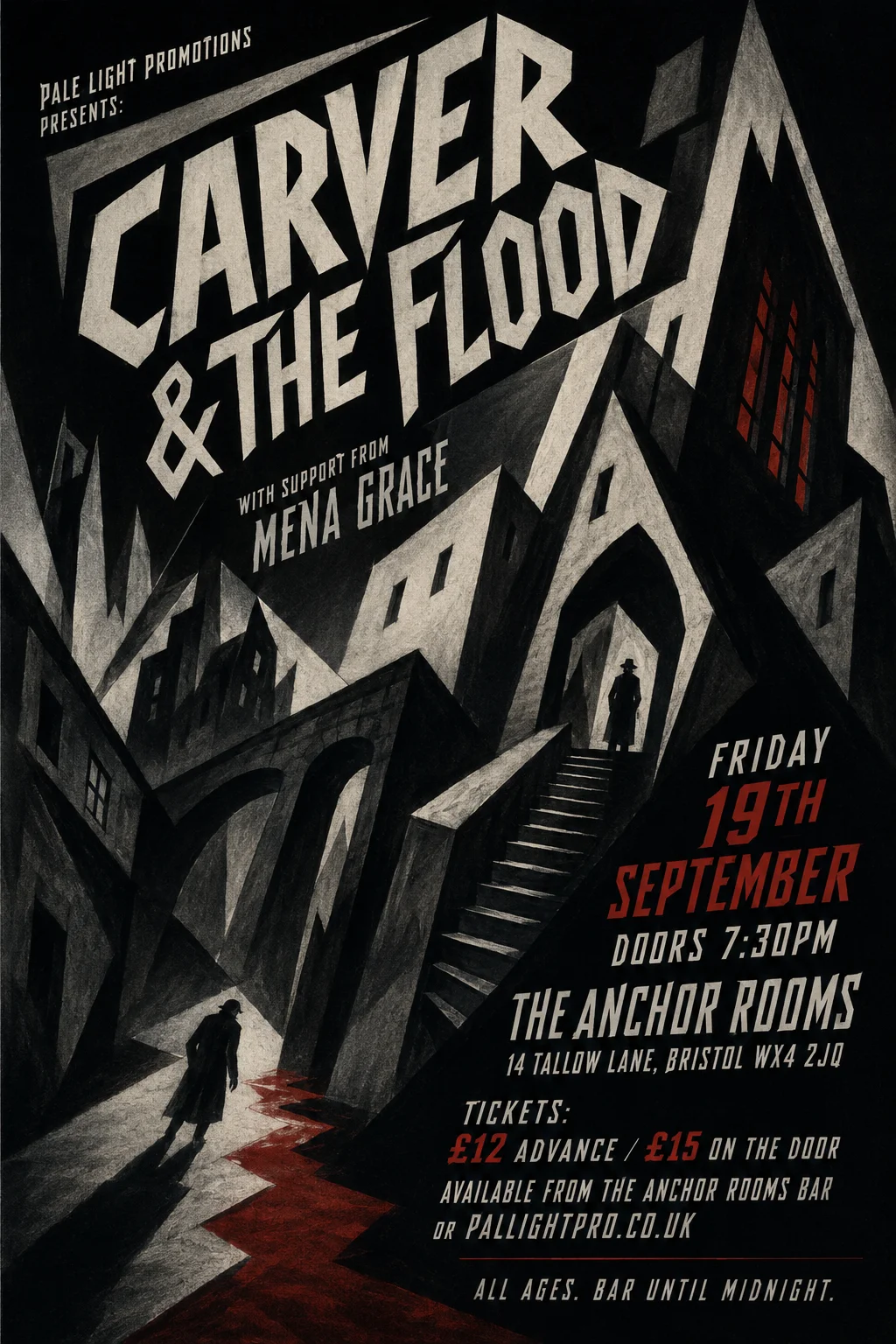
German Expressionist Film Poster (1919–1933)
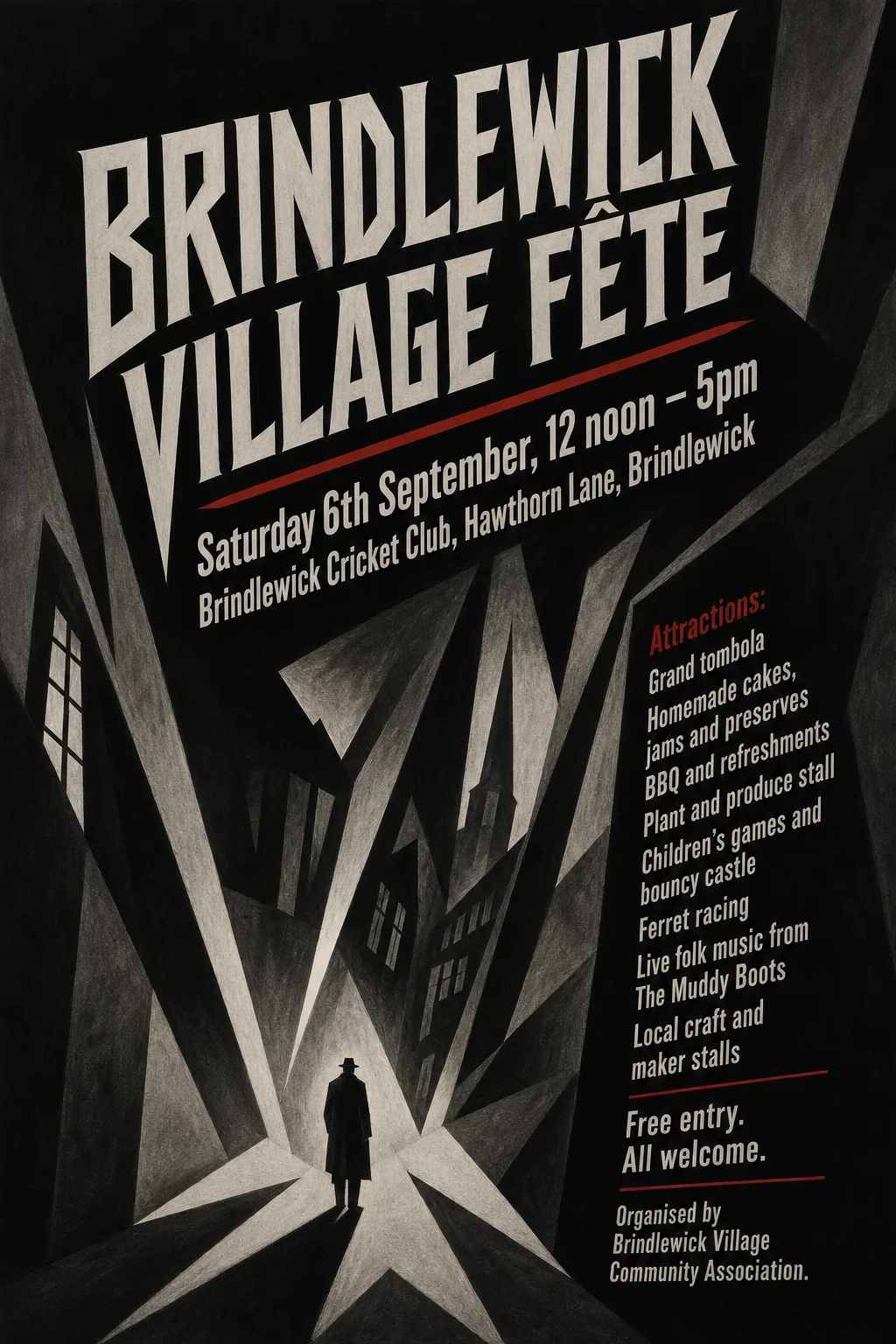
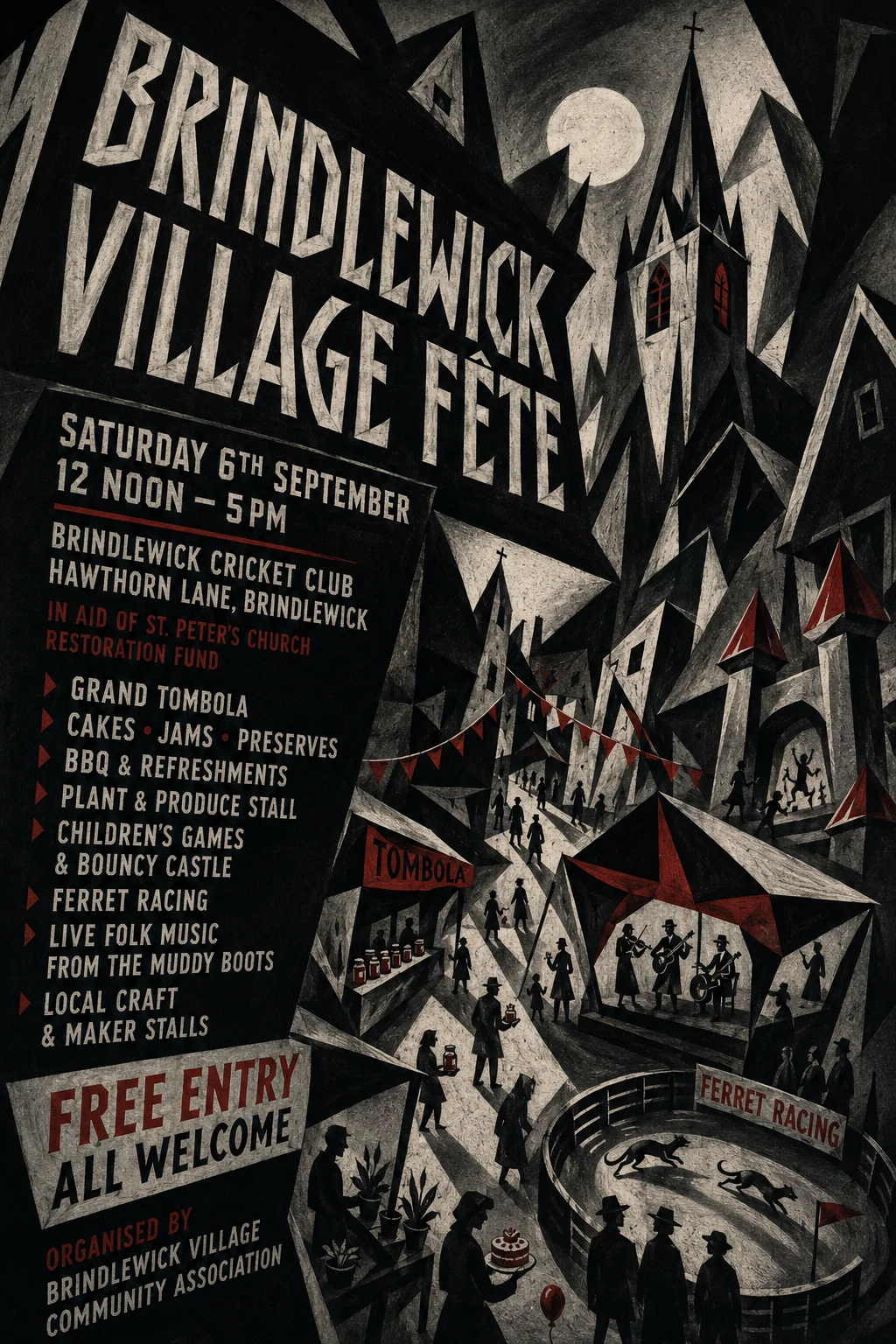
The visual language of Weimar cinema — The Cabinet of Dr. Caligari, Nosferatu, Metropolis — applied angular distorted architecture, deep raking shadow, and claustrophobic oblique perspective to poster design. The sets designed by Expressionist painters became the aesthetic of psychological horror. The geometry itself is threatening: walls lean, streets tilt, figures are dwarfed by impossible architecture.
Fête poster
This time it settled on a lone, hat-wearing figure, angular street of leaning buildings and raking shadows. Another go would keep the style's own kind of subject while offering another leaning cityscape.
Gig poster
This time it landed on a lone, back-facing figure, standing in a canyon of sharply distorted black, grey and white buildings beneath the oversized title. Another go would keep the style's own kind of subject while offering another leaning cityscape.